Ganesh Chaturthi is traditionally celebrated for ten days because the festival spans the fourth tithi (Chaturthi) to the fourteenth tithi (Anant Chaturdashi) of Bhadrapada Shukla Paksha, a gap that's always exactly ten days on the lunar calendar. Mythology adds another layer: Ganesha is said to have written the Mahabharata for Sage Vyasa without a single pause for ten days. Lokmanya Tilak later used those same ten days to unite people during India's freedom struggle.
Why Is Ganesh Chaturthi Celebrated for 10 Days?
Ask five people why Ganesh Chaturthi is celebrated for 10 days, and you'll likely get three different, equally valid answers: one from the lunar calendar, one from mythology, and one from history. All three hold up, and together they explain why the festival never got trimmed down to a single day.
| Reason | What It Says | Why It Still Matters |
|---|---|---|
| Calendar (Tithi) | Chaturthi is the 4th tithi, and Anant Chaturdashi is the 14th, a fixed 10-day gap in Bhadrapada Shukla Paksha. | Sets the exact window every priest and panchang follows. |
| Mythology (Vyasa-Ganesha) | Ganesha wrote the Mahabharata for Sage Vyasa nonstop for 10 days, then bathed on the 10th to wash off the dust. | Explains the idol's arrival, worship, and final immersion. |
| History (Tilak) | Lokmanya Tilak popularized the public Sarvajanik Ganeshotsav in 1893 to unite people during British rule. | Turned a home ritual into the 10-day community celebration seen today. |
The most retold version comes from the Mahabharata itself. Sage Vyasa needed a scribe fast enough to keep up with his dictation, and Ganesha agreed on one condition: Vyasa could never pause once he started speaking. According to popular retellings, Ganesha wrote continuously for ten days, even breaking off one of his tusks to continue when his writing tool gave out. By the tenth day, he was covered in dust from the effort, and he cooled off with a bath in a nearby river. Many devotees see that final bath as the root of Ganesh Visarjan on the tenth day, not just a tradition but an echo of that first ritual dip.
How Ganesh Chaturthi Became a Public Festival
The public, 10-day version of the festival owes a lot to Pune. Ganeshotsav had royal support under Chhatrapati Shivaji Maharaj and later the Peshwas, who treated Ganesha as their family deity. Once Peshwa rule ended, the celebration shrank back into a private, home affair. Physician and freedom fighter Bhausaheb Rangari organized one of the earliest public celebrations in 1892, and Lokmanya Tilak further developed the idea in 1893, turning it into the Sarvajanik Ganeshotsav. Since the British restricted political gatherings but left religious ones alone, Tilak used the ten days to bring people of every caste and background together to sing, plan, and organize, right under colonial rule.
What Is the Significance of the Ganesh Chaturthi 10 Days?
Beyond the history, the 10-day significance of Ganesh Chaturthi lies in what the days actually ask of a devotee. Welcoming Ganesha home for ten days mirrors hosting a family member who has come to stay a while, with all the daily attention that involves- fresh flowers, a proper meal offering, and someone home to greet him morning and evening. That daily rhythm builds patience and discipline in a way a single day of worship can't.
The ten days also became India's biggest platform for public devotion. Grand mandals like Mumbai's Lalbaugcha Raja or Hyderabad's Khairatabad Ganesh draw lakhs of visitors precisely because the extended timeline gives entire neighborhoods, not just individual households, a reason to come together.
How Is the Ganesh Chaturthi 10 Days Celebration Observed?
A typical Ganesh Chaturthi 10-day celebration follows this arc:
Day 1 — Sthapana: The idol is installed and welcomed home with an aarti at the door.
Days 2 to 9: Daily morning and evening puja, fresh modak or naivedya each time, and for public mandals, cultural programs, bhajans, and community meals.
Day 10 — Anant Chaturdashi: A final aarti, followed by visarjan, when the idol is immersed with the promise "Ganpati Bappa Morya, Pudhchya Varshi Lavkar Ya."
If you are planning the ceremony at home, follow our guide to performing Ganesh Chaturthi puja.
Not every home keeps Bappa for the full ten days. Many families follow Dedh Din (1.5 days) or 3, 5, or 7-day traditions instead, depending on space and family custom. For the exact 2026 dates, sthapana muhurat, and city-wise timings, check our Ganesh Chaturthi Puja Vidhi guide.
What Puja Samagri and Decoration Items Do You Need for 10 Days of Celebration?
Ten days of worship require more puja essentials than a single-day celebration, so it is best to prepare your Ganesh Chaturthi samagri list in advance and avoid running out of items mid-festival. A solid Ganpati puja samagri stock for the full stretch includes:
- ✓ Agarbatti or dhoop in a larger pack, since you'll be lighting it twice a day
- ✓ Cup sambrani for the evening aarti
- ✓ Camphor and ghee for the diya, replenished daily
- ✓ Fresh durva grass and flowers for each day's offering
- ✓ Haldi, kumkum, and akshata for daily tilak

Om Shanthi Premium Cup Sambrani — a puja essential for the evening aarti
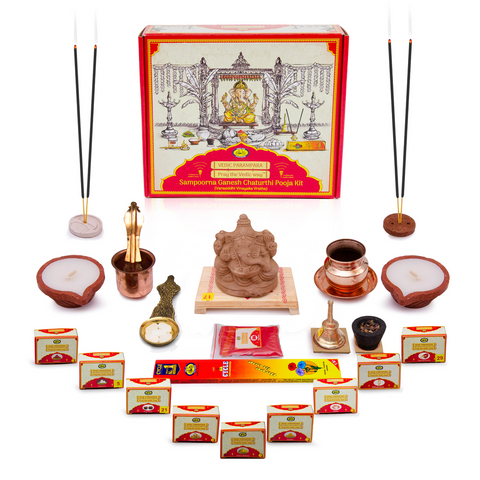
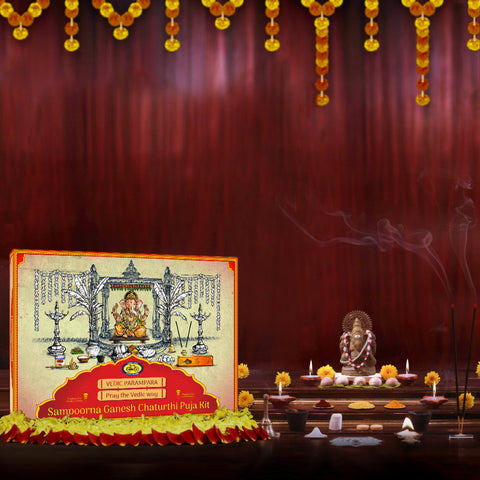
For the full Ganesh Chaturthi puja samagri in one go, Cycle's Sampoorna Ganesh Chaturthi Puja Kit works as a ready Ganesh puja kit online, and the wider Puja Samagri collection covers Ganesh Chaturthi pooja items online for topping up mid-festival.

Sampoorna Ganesh Chaturthi Puja Kit — everything you need in one box
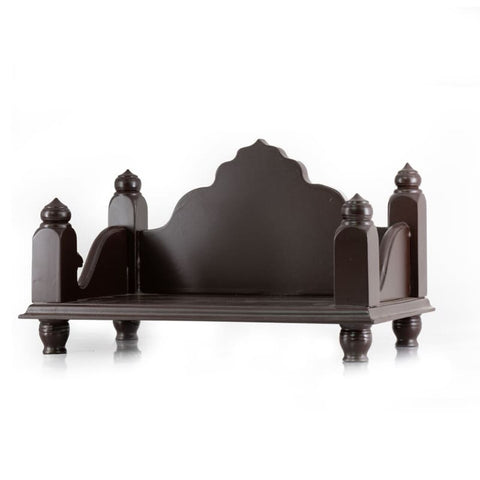
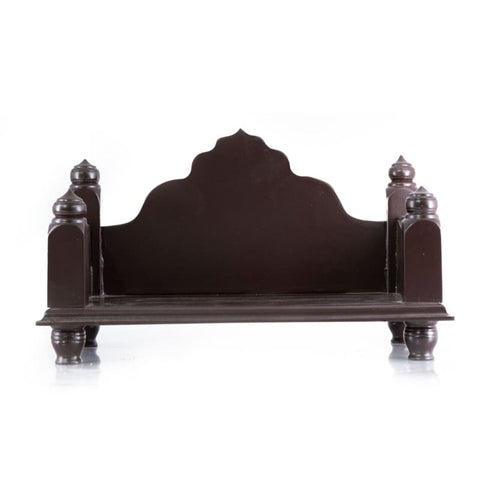
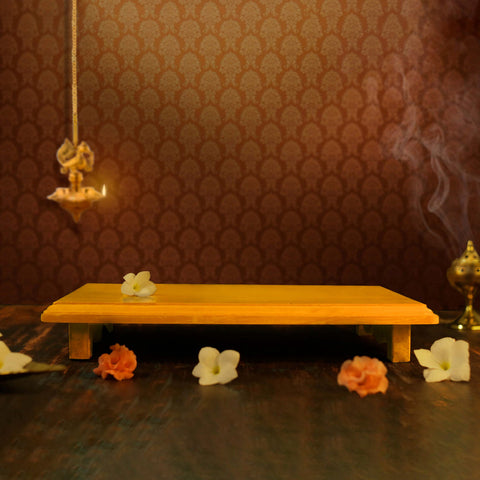
Ten days also means the mandap needs to stay fresh, not just for day one. Ganesh Chaturthi decoration items like a thoranam, a wooden peeta, an ash catcher, and tealight holders hold up well across the full stretch, and Cycle's Puja Decor collection has ganpati decoration items online that work for both a home altar and a small mandal setup.

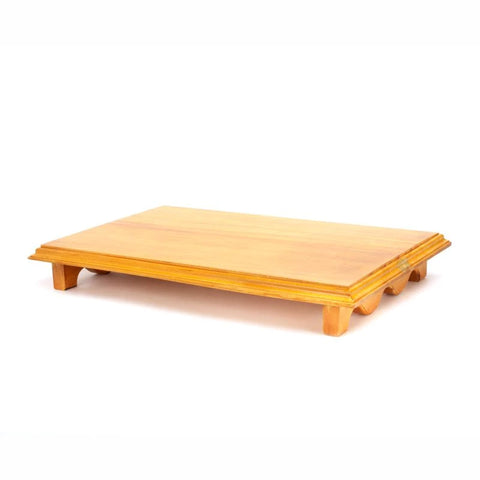
Handcrafted Teakwood Puja Peeta — durable mandap decor for all 10 days
What Are Good Ganesh Chaturthi Gifts?
With guests dropping by over ten days, return gifts and small Ganesh Chaturthi gifts come in handy more often than a single-day festival would need. Incense gift boxes, a small Ganesha idol, or a kids' devotional activity kit all work well as thoughtful, budget-friendly options. Cycle's Gifting collection has a range built for exactly this, from festive incense sets to kids' puja kits that double as a fun return gift for younger visitors.

Play, Learn & Pray with Ganesha — a thoughtful return gift for young visitors