Govardhan Puja falls on Tuesday, November 10, 2026, two days after Diwali. Families shape a small Govardhan hill, light diyas and offer Annakut, a spread of vegetarian dishes, to Lord Krishna. The puja remembers the day Krishna lifted Govardhan Hill to shelter Vrindavan from Indra’s storm.

What is Govardhan Puja?
Govardhan Puja is also called Annakut. Devotees observe it on Kartik Shukla Pratipada, the first day of the bright fortnight of Kartik. In most years, that is the day after Diwali, which makes it the fourth day of the festival. Annakut means a mountain of food, and temples and homes prepare one for Krishna on this day.
Families still gathering items for Lakshmi Puja can use the Diwali puja samagri list for 2026 and add a few Krishna-specific items for the following morning.
When is Govardhan Puja in 2026?
The Govardhan Puja date of 2026 is Tuesday, November 10, in India. According to the Drik Panchang for Delhi, Pratipada Tithi begins at 12:31 PM on November 9 and ends at 2:00 PM on November 10. The morning puja window (Pratahkala muhurat) runs from 6:40 AM to 8:50 AM, a span of 2 hours and 10 minutes.
| Observance | Date and time (Delhi) |
| Diwali Lakshmi Puja | Sunday, November 8 |
| Pratipada begins | 12:31 PM, November 9 |
| Govardhan Puja and Annakut | Tuesday, November 10 |
| Pratahkala muhurat | 6:40 AM to 8:50 AM |
| Pratipada ends | 2:00 PM, November 10 |
The gap between Diwali and Govardhan Puja surprises many families. Amavasya runs until 12:31 PM on November 9, so Pratipada has not started at sunrise that day. Sunrise on November 10 falls inside Pratipada, and the morning puja moves to that date.
Check your city: Tithi timings change with location. Families abroad, including in the United States, may see Pratipada begin and end a day earlier. Confirm the date with a local panchang or your temple.
What is the Govardhan Parvat story?
The Govardhan Puja story comes from the Bhagavata Purana, Canto 10, chapters 24 and 25. Every year, the people of Braj held a yajna for Indra to thank him for rain. Young Krishna asked them to think again. Their cattle grazed on the hill, and the forests around it supported their lives. He suggested they honour Govardhan instead, and Nanda Maharaj and the villagers agreed.
Indra took offence and sent heavy rain and wind over Vrindavan. The cows and villagers ran to Krishna for shelter. He lifted Govardhan Hill with one hand and invited everyone to stand beneath it. The Bhagavata says he held the hill for seven days without moving from the spot. This episode forms the core of the Lord Krishna Govardhan Leela, and the Govardhan Parvat story is retold across Braj every year on this day.
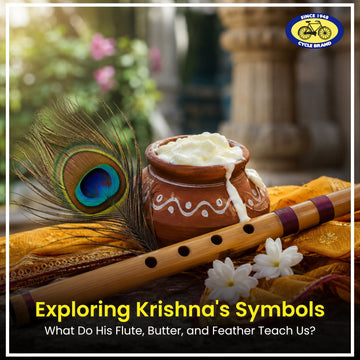
After seven days, Indra understood Krishna’s power and withdrew the clouds. Krishna set the hill back in its place. Indra apologised, Surabhi, the divine cow, bathed Krishna in her milk, and Indra gave him the name Govinda, protector of cows. Krishna also carries the name Giridhari, the one who held the hill. The flute and the peacock feather that accompany his image have meanings of their own, which our guide to Krishna’s symbols explains.
Common misconception: Some retellings paint Indra as a villain. The Bhagavata closes the episode with Indra’s apology and Krishna’s acceptance of it.
Why is Govardhan Puja important?
The Govardhan Puja significance has three layers.
Gratitude to land and cattle. The festival thanks the hill, the grass and the cows that sustained a farming community.
Humility. Indra’s pride gives way to understanding, and the Bhagavata places that change at the centre of the story.
Shelter shared by all. People and animals of Braj stood together under one hill.
Each lesson has a simple household form. Make a small hill, offer food you cooked yourself, and share it with others. Families with young children can pass the story on through play. A Krishna with cow jigsaw puzzle gives children a picture to piece together while an elder retells the tale.

How to perform Govardhan Puja at home?
The Govardhan Puja Vidhi below suits a courtyard, balcony or puja room. The main Govardhan Puja rituals are making the hill, worshipping Krishna and the cows, offering Annakut and walking around the hill. Keep items ready the night before so the morning muhurat stays calm. The puja essentials collection gathers camphor, wicks and other basics in one place.
Prepare the space. Bathe, wear clean clothes and clean the puja area.
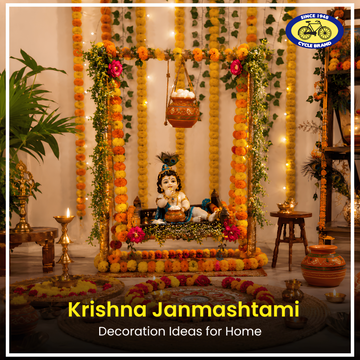
Make Govardhan. Shape a small hill or reclining figure from cow dung, the traditional material. Decorate it with flowers, grass, sugarcane pieces and small clay trees, and place a Krishna image beside it. The Janmashtami decoration ideas suit this setup too.
-
Light the lamp. Place a ghee diya near the head of the figure. Navin Puja Ghee is non-edible and made for lamps.

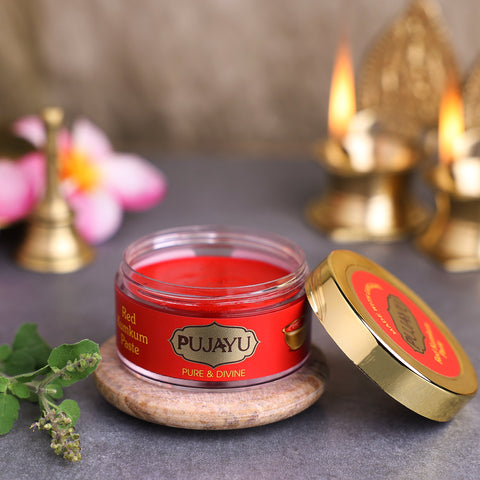
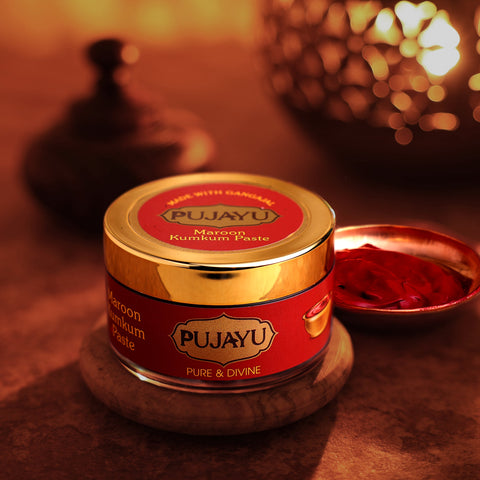
Apply tilak and offer Panchamrit. Mark the figure with kumkum and turmeric, then offer a few drops of Panchamrit. Pure Om Shanthi kumkum powder works well for the tilak.
Worship the cows. If you keep cows or can visit a gaushala, offer fodder and apply a tilak.
Offer Annakut. Arrange the dishes before the figure, along with sugarcane, curd, milk and honey.
Walk around the hill. Circle the figure clockwise and trickle water or uncooked rice along the path.
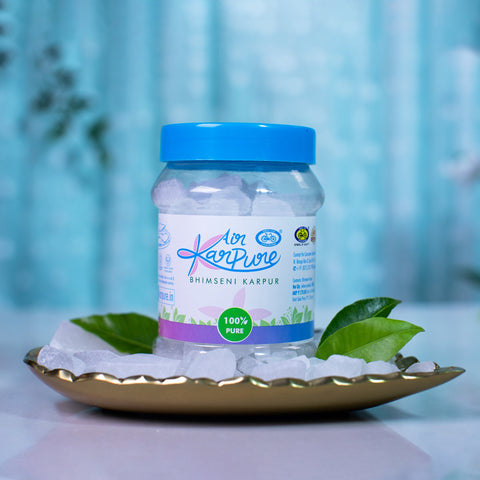
Perform aarti. Light pure Bhimseni camphor, sing the Govardhan aarti and share the prasad.
A home mandir that keeps Krishna year-round can hold the Lord Gopala Krishna brass idol, which shows him in the flute-playing posture.
What is an annakut bhog?
Annakut Puja 2026 takes place during the same morning rituals. Households and temples cook a wide range of vegetarian dishes, arrange them in heaps before Krishna, and share them as prasad. The Annakut bhog often counts 56 items, known as Chappan Bhog. Popular tradition says Krishna ate eight meals a day. After seven days without food under the hill, the villagers offered him 7 x 8 = 56 dishes. Many temples offer 108 items or more, while a home puja can use 11, 21 or 51 dishes.
| Group | Examples |
| Grains | Steamed rice, khichdi, puri |
| Lentils and kadhi | Dal, kadhi |
| Vegetables | A mixed seasonal vegetable dish |
| Sweets | Kheer, halwa, laddu |
| Dairy and fruit | Curd, milk sweets, seasonal fruit |
Cook with fresh, sattvic ingredients and offer the food to Krishna before anyone eats. Serve it on clean brass or steel plates. The puja utensils collection carries brass vessels suited to this offering.
Where do people celebrate Govardhan Puja?
The Govardhan Puja celebration looks different across India.
| Region | Local observance |
| Braj (Govardhan, Mathura, Vrindavan) | Temples set up Annakut displays, and pilgrims circle Govardhan Hill on the 21 km Parikrama. |
| Nathdwara, Rajasthan | Shrinathji Temple holds one of the largest Annakut displays in India. |
| Gujarat | Swaminarayan temples display Annakut, and the same Pratipada begins the Gujarati New Year. |
| Maharashtra | Observed as Padwa |
| Karnataka and Andhra Pradesh | Observed as Bali Padyami, which honours King Bali |
The Parikrama circles the hill clockwise, keeping it on the pilgrim’s right, and takes about five to seven hours on foot. Many pilgrims walk barefoot and begin with a dip at Mansi Ganga.
Visits, greetings and gifts fill the days around Diwali. The gifting collection offers incense and puja gift sets for these occasions.